
The RWA Trilemma
By Thomas·22 May 2026·4 min read
Why Real Estate Tokenization Has Failed (And How Loaf Is Fixing It)
Real estate is the world's largest asset class. $330 trillion. But less than 0.001% has been tokenized.
It has been “almost there” for eight years now.
It hasn’t happened. Not even close.
The same three failures have killed every project that’s tried, and nobody’s named them clearly until now.
We call it the RWA trilemma.
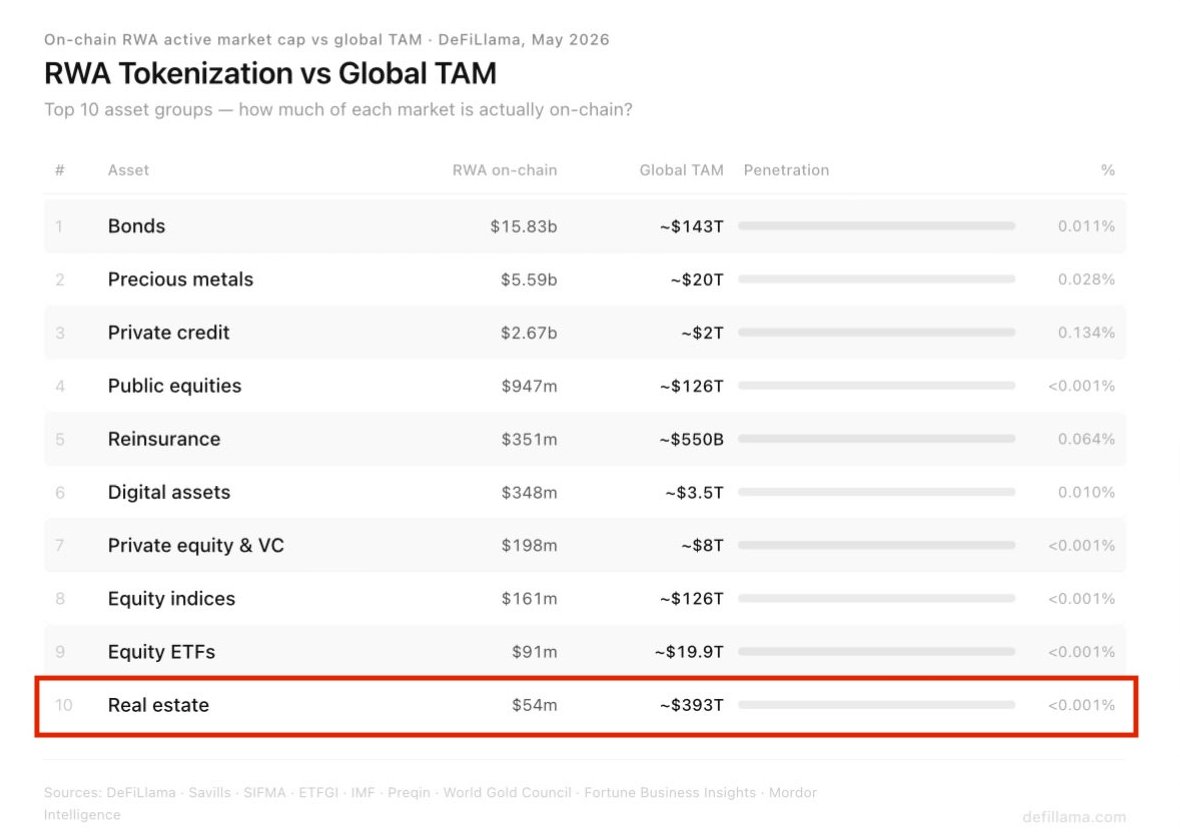
Failure #1: The wrong assets
Lofty has tokenized 100+ properties across 40 US markets like Cleveland, Memphis, and Phoenix.
The pitch is framed around accessibility, fractional ownership in a rental home for as little as $50. But here’s the problem: nobody wants a suburban Cleveland duplex. They’re buying yield. And the moment a better yield appears somewhere else, they’re gone.
Real estate has always run on aspiration and scarcity. The assets that hold value through every crash, 2008, COVID, and every downturn since, are the ones wealthy buyers never stopped wanting: prime waterfronts, trophy commercial, luxury penthouses, and so on.
If the underlying asset doesn’t have intrinsic demand, your platform/project/token/vault has no gravitational pull.
Failure #2: The wrong market structure
Say you do have great assets. Now try to trade them.
The industry split into two camps. Both are broken.
The AMM approach: spin up a liquidity pool and let the market find a price. The issue is it doesn’t work in practice for real estate. Academic research across 572,000 trades on 673 tokenized properties shows why AMM structures collapse on heterogeneous assets. Every property has different risk, income, and legal structure. Fungibility breaks down and pricing becomes incoherent.
Parcl’s fix was to trade synthetic city-level indices instead of individual properties. That solves the fungibility problem by removing the asset entirely. What you’re left with is exposure to median price per square foot in Tampa (for example). But in their case, once the airdrop cycle ended, ~97% of their TVL disappeared.
The P2P marketplace approach: a user lists their intent and waits for the other side. Lofty’s own CEO has been honest about it, liquidity bootstrapping is their core challenge. You need volume to generate yield, yield to attract volume. That flywheel never spun. Even in web2 (BrickX and others), they struggle for liquidity.
There’s also a subtler problem: these platforms look like Airbnb and Booking.com. If your product feels like somewhere to book a weekend away, you will not attract the traders that make markets real.
The right structure for property trading is a central limit order book, visible bids, visible offers, guaranteed execution. CLOBs are just technically hard to build. So nobody built one.
Until now.
Failure #3: No economic engine
Even with great assets and real infrastructure, most projects have no mechanism to sustain activity.
Yield alone isn’t enough. A 7% gross return on a B-grade rental (after management fees) doesn’t move institutional capital. And without an institutional bid, you don’t have a real market.
But the deeper problem is that real estate tokenization has tried to build without a trading layer. No derivatives. No leverage. No directional products.
Every functioning financial market is held up by two groups: income seekers and directional bettors. Holders and traders. Remove one and the whole structure loses depth and the flywheel grinds to a halt.
Speculation isn’t a dirty word. Without it, liquidity dries up. Without liquidity, the fundamental yield doesn’t matter either.
What actually fixes this
This is what Loaf is building: all three pillars, from scratch.
Assets
We only list luxury property, the tier that UHNW buyers have transacted in regardless of market conditions, for decades. We already have $300M+ in the pipeline ready to deploy.
Market
We’ve built a proper CLOB. Our engineering team came from NASDAQ, IMC, and Citadel. We pair it with a proprietary market maker so orders clear fast. We’ll be posting more about this soon.
Flywheel
Yield streams directly to token holders. On top of that, we’re building the speculative layer that’s always been missing: leverage, perpetuals, and prediction markets on specific assets people actually care about.
The trilemma is real.
The solution is built.
We’re opening a trading competition on testnet in the coming weeks.
Sign up at loafmarkets.com
Related Articles
02 October 2026·3 min read
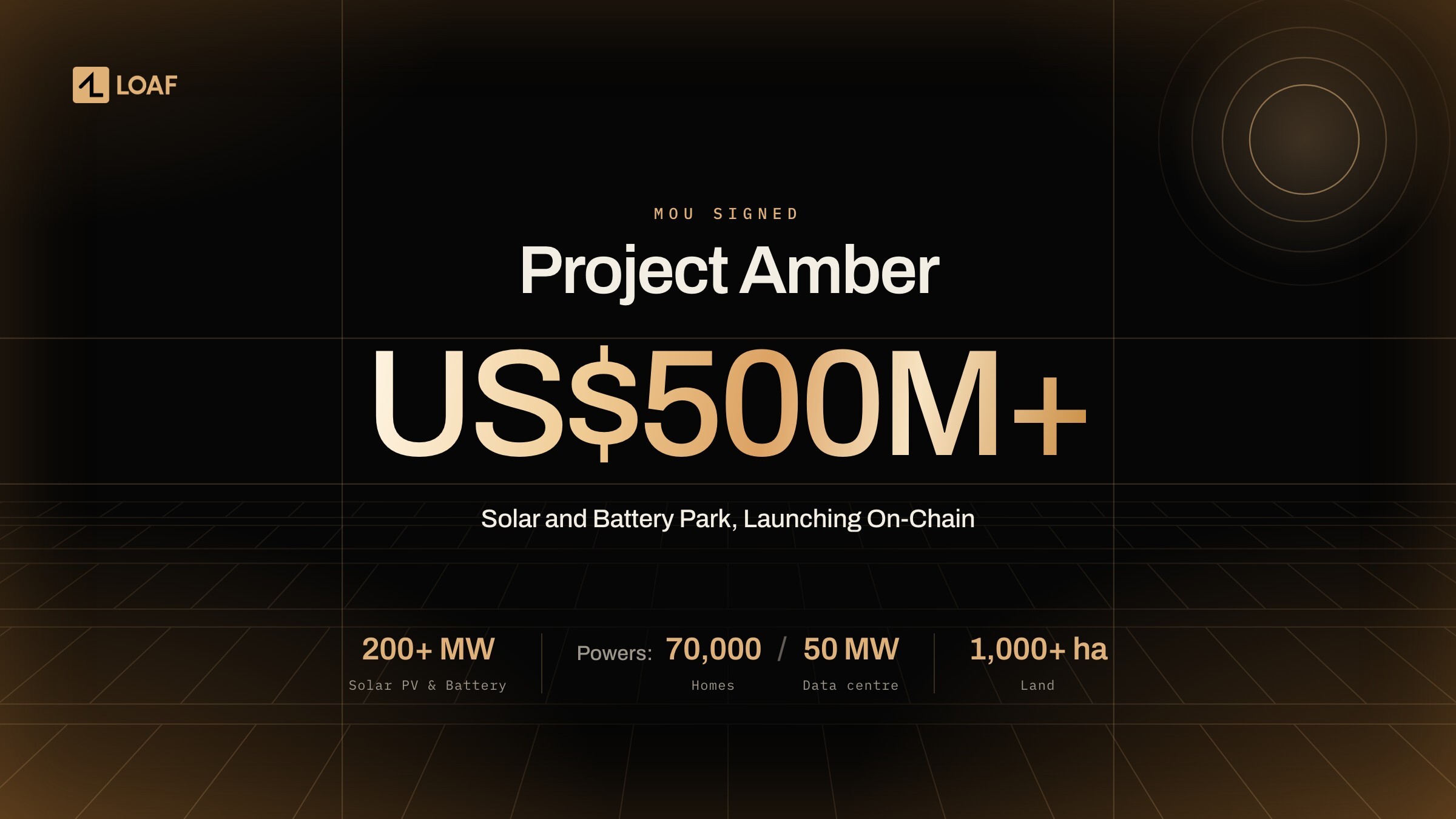
Loaf signs MOU on US$500 million of Solar Assets, ahead of launching on-chain trading for physical assets
Loaf and Fusion Source Energy have signed an MOU to bring Project Amber, a 200+ MW solar and battery hybrid project valued at over US$500 million, on-chain. Spanning more than 1,000 hectares, the utility-scale asset is expected to power 70,000 homes or a 50 MW data centre, with additional pipeline assets including smaller BESS and distributed energy resources across Australia.
06 August 2026·2 min read
Bringing Live Markets to Physical Assets with TradingView
Loaf Markets announces its partnership with TradingView to bring live markets and charting to physical assets.

22 July 2026·2 min read
Scaling Physical RWA’s to millions with Arbitrum
Today, Loaf is announcing its collaboration with Arbitrum to accelerate the migration of billions of dollars of physical assets on chain.